
It's been a while since I last wrote about Blockchain, but with recent developments around Agentic Commerce…
by Marcel Hollerbach · World of Commerce
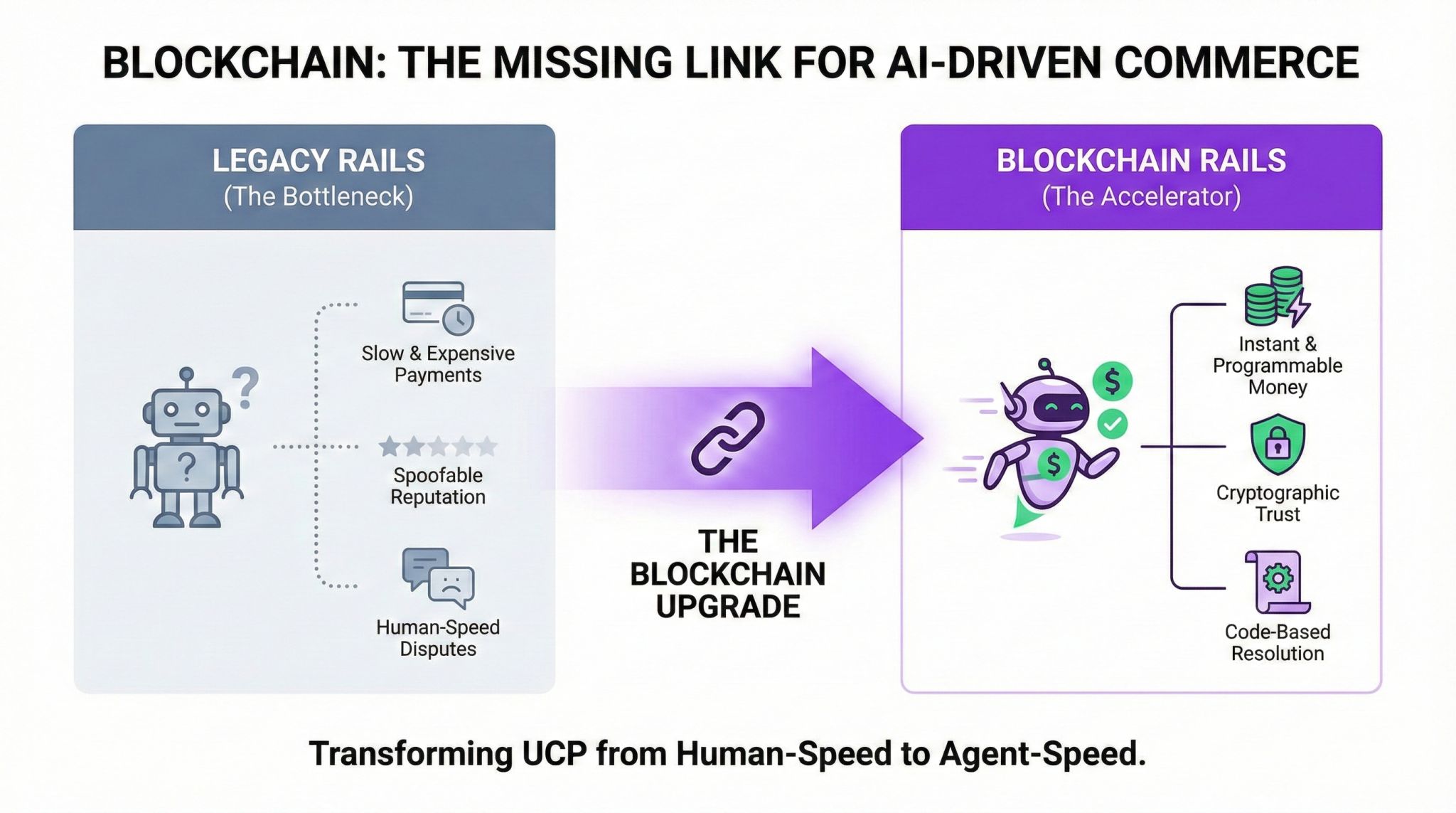
It's been a while since I last wrote about Blockchain, but with recent developments around Agentic Commerce that we see at Productsup it was about time to look into this again. 🚨 Spoiler Alert: #NFT might come back.
While the Universal Commerce Protocol (UCP) streamlines discovery and cart intent, it remains tethered to legacy settlement and identity rails. Because AI agents prioritize private keys over bank accounts, blockchain is the inevitable infrastructure for the "settlement layer."
Here are my three hypotheses on how blockchain will bridge the #UCP gap:
1️⃣ Hypothesis 1:
"Proof of Intent" as an Immutable Judicial Layer
The Problem: UCP relies on JSON exchanges. If an agent negotiates $50 but is charged $60, server logs can be manipulated, and "hallucinated" discounts create liability nightmares.
The Blockchain Unlock: Critical UCP handshake payloads (confirm_order, negotiate_price) are hashed and anchored on-chain, acting as a "black box" flight recorder.
Mechanism: Smart contracts serve as trustless escrow. Funds are only released when the fulfillment signal matches the on-chain order hash. This ensures agents don't need to trust a merchant’s backend logic for pricing or inventory.
2️⃣ Hypothesis 2:
From Star Ratings to Soulbound Reputation
The Problem: UCP is vulnerable to attacks and DDoS-via-checkout. Traditional bot detection (CAPTCHA, behavioral...) is obsolete in headless commerce.
The Blockchain Unlock: Agents will carry Soulbound Tokens (SBTs) or Verifiable Credentials (VCs) as cryptographic passports.
Mechanism: A merchant’s UCP server will auto-reject initiate_checkout requests from wallets lacking specific credentials (e.g., "Verified Buyer" status or a minimum on-chain spend). Anti-fraud moves from behavioral analysis to cryptographic verification.
3️⃣ Hypothesis 3:
Tokenized Inventory (RWAs) for Agentic Futures
The Problem: UCP checks inventory_status but cannot prevent "double-spend" inventory or allow agents to exit a position before delivery.
The Blockchain Unlock: UCP receipts are issued as NFT-wrapped Real World Assets (RWAs), creating a liquid secondary market for logistics.
Mechanism: An agent purchases the tokenized right to an item. If demand spikes (e.g., a GPU shortage), the agent can instantly arbitrage that NFT on a DEX to another agent before the physical item even leaves the warehouse. Static inventory becomes liquid, tradable assets.